When Salesforce sits at the heart of your business operations, even small missteps can create serious consequences. A permission left unchecked, a workflow built without documentation, a compliance gap that goes unnoticed for months, none of these start out looking dangerous, but they compound quickly.
Salesforce risk reduction is about getting ahead of these problems before they cost you. Businesses that treat it as a strategic priority — not an afterthought — protect their data, their customers, and their CRM investment in ways that others simply do not. This blog breaks down where Salesforce risk reduction challenges actually come from and what working with the right consulting partner genuinely looks like.
What Salesforce Risk Reduction Actually Means for Your Business
Most conversations about CRM risk focus on cybersecurity — firewalls, passwords, and data breaches. A study has shown that businesses using Salesforce report an average 44% increase in conversion rates. But Salesforce risk reduction goes much deeper than that. It covers the full range of threats that can undermine your CRM environment: poor governance, misconfigured automations, compliance drift, stagnant performance, and the slow accumulation of technical debt that nobody quite owns.
Proper Salesforce risk management is not a one-time audit. It is a continuous discipline that spans your entire platform lifecycle — from your initial Salesforce implementation services through day-to-day administration, optimization, and support. The businesses that manage this well treat Salesforce risk reduction not as a technical task but as an operational strategy.
The Most Common Salesforce Risks Businesses Overlook
Here is something most businesses do not realize until it is too late — Salesforce risk reduction failures rarely look like a crisis when they start. It looks like a workflow nobody documented, a permission that got expanded “just this once,” or an integration that throws occasional errors that everyone learned to ignore. These things feel manageable in the moment. Over time, they are not. Understanding where Salesforce risk reduction needs to happen is the starting point for managing it well. Below are the areas where most organizations quietly fall behind.
Single Admin Dependency Puts Your Entire Org at Risk
Most businesses have at least one person who knows their Salesforce org inside out — and almost nobody else does. That might feel fine right now, but think about what happens when that person leaves, takes an extended leave, or simply cannot be reached during a critical moment. The automations they built, the configurations they tweaked, the workarounds they put in place — none of it is written down anywhere. You are left guessing. Salesforce managed services solve this by ensuring knowledge is shared, documented, and maintained as an organizational asset rather than a personal one. A good Salesforce managed service provider makes sure your org can run without depending on any single individual — and that is a foundational piece of any Salesforce risk reduction plan.
Governance Gaps Create Compliance Exposure
Access permissions in Salesforce have a way of expanding gradually — one exception here, one workaround there — until nobody is quite sure who can see what anymore. Role hierarchies drift. Data changes go untracked. And then an audit happens, or a regulator asks a question, and suddenly you are piecing together answers from a system that was never set up to provide them. For businesses operating under HIPAA, GDPR, or SOX, that situation is not just uncomfortable — it is a legal risk. Proper Salesforce consulting services built around Salesforce risk reduction put governance structures in place from the ground up: access controls that are intentional, change logs that are maintained, and compliance frameworks that hold up when they are tested.
Technical Debt Makes Your Org Fragile Over Time
Nobody builds technical debt on purpose. It accumulates through years of small decisions — a field created without a naming convention, a flow built to solve a short-term problem; a deployment pushed without proper testing because the deadline was tight. Each decision made sense at the time. Together, they create an org that slows down, breaks unexpectedly, and becomes harder to change with every passing month. Regular Salesforce CRM optimization is a core part of Salesforce risk reduction and keeps technical debt from compounding. It means periodically stepping back, cleaning up what is no longer needed, and making sure your Salesforce development services follow standards that keep the org stable and maintainable as your business grows.
Poor Implementations Create Long-Term Risk from Day One
A significant amount of Salesforce risk reduction work is actually needed during implementation, not after, not discovered years later. When requirements are not gathered thoroughly, when data migration is rushed, when testing is compressed, or when user training is treated as optional, the consequences show up slowly and persistently. Fields are mapped incorrectly. Processes that do not match how teams actually work. Adoption that never quite takes hold. Structured Salesforce implementation services take a different approach — phased rollouts, proper discovery, clearly defined go-live criteria, and adoption planning built in from the start. Getting implementation right is not just good for project management. It is one of the most impactful forms of Salesforce risk reduction a business can invest in.
Platform Stagnation Leads to Performance and Security Gaps
Salesforce releases three major updates every year. Organizations that do not actively manage these releases undermine their own Salesforce risk reduction efforts and face compatibility issues, deprecated features, and growing performance gaps. Salesforce performance optimization is the ongoing work of keeping your CRM aligned with platform changes — updating integrations, reviewing automations, and ensuring configurations continue to reflect how your business actually operates. Without this, your Salesforce solutions slowly drift out of alignment with both your business needs and Salesforce’s evolving capabilities.
How Expert Salesforce Consulting Services Make Risk Reduction Systematic
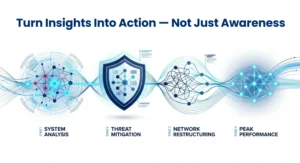
Knowing where risks exist in your Salesforce environment is useful. But knowledge without a system to act on it does not make your org any safer. The real value of working with expert Salesforce consultants is not just the problems they identify — it is the framework they build so that risk stops accumulating in the first place. Most internal teams are stretched across day-to-day requests, user issues, and business priorities. Adding structured, ongoing Salesforce risk reduction discipline on top of that is difficult without outside support — which is exactly why Salesforce risk reduction needs a dedicated partner. Here is what a proper consulting engagement puts in place.
Org Health and Risk Assessment
Before anything can be improved, you need an honest picture of where things stand. A thorough org health assessment looks at your access permissions, automation logic, data quality, integration behavior, and governance gaps — not to criticize what was built, but to understand what needs attention and in what order. This is where every effective Salesforce risk reduction engagement begins: with a clear baseline that tells you what you are working with.
Governance and Change Management Design
A governance framework is the backbone of long-term Salesforce risk management and a critical enabler of ongoing Salesforce risk reduction. This includes role-based access controls, approval workflows, release management protocols, sandbox testing requirements, and documentation standards — all designed to prevent unauthorized or uncoordinated changes from creating systemic risk.
Technical Debt Remediation
Cleaning up accumulated technical debt is careful, methodical work. You cannot simply delete things and hope for the best — everything in Salesforce is connected to something else. Quality Salesforce development services bring dependency analysis, impact testing, and rollback planning to this process, so redundant automations, conflicting flows, and broken configurations can be removed without disrupting what is working. Done properly, this kind of remediation makes your org significantly more stable — and represents one of the highest-impact forms of Salesforce risk reduction available to any business.
Continuous Salesforce CRM Optimization
An org health project is not a one-time fix. Salesforce changes three times a year, your business changes constantly, and the risks in your environment shift along with both. Continuous Salesforce CRM optimization means your configurations stay aligned with how you actually operate, your performance is monitored before problems surface visibly, and new risks are caught early rather than after they have caused real damage. This ongoing discipline is what separates businesses that stay ahead through proactive Salesforce risk reduction from those that are always reacting to it.
What Ongoing Salesforce Managed Services Deliver Beyond Break-Fix Support
There is a version of Salesforce support that most businesses are familiar with — you notice something is broken, you raise a ticket, someone fixes it, and you move on. It works well enough until the moment it does not. The problem with that model is that by the time something is broken visibly, it has usually already been causing damage quietly for a while.
Salesforce managed services are built on a completely different premise. Rather than waiting for problems to show up, a Salesforce managed service provider is actively watching your environment, catching issues early, and handling the kind of ongoing maintenance that keeps Salesforce risk reduction working between support calls. Think of it less like a repair service and more like having a dedicated team whose job is to make sure your Salesforce org stays healthy, current, and aligned with your business — all the time, not just when something goes wrong.
For businesses that rely on Salesforce services for small businesses, this model is especially valuable. You get access to certified professionals, structured governance practices, and ongoing Salesforce performance optimization without the cost of building an in-house team capable of delivering the same. That includes keeping your integrations healthy, managing platform releases proactively, and ensuring that tools like Salesforce Loyalty Management — which touch customer experience directly — are maintained as part of your broader Salesforce risk reduction strategy.
Beyond the day-to-day work, managed services also create the kind of documentation and process continuity that most organizations never get around to building on their own. Over time, that becomes one of the most meaningful forms of Salesforce risk reduction a business can have — not because it solves a specific problem, but because it means fewer problems get the chance to grow into serious ones.
Signs Your Business Needs to Prioritize Salesforce Risk Reduction Right Now
Salesforce risk does not always surface through obvious failures. More often, it shows up as small inefficiencies, quiet workarounds, and patterns that feel normal until they are not. Recognizing the early warning signs is what separates businesses that manage risk proactively from those that react to it after the damage is done. If any of the following sounds familiar, it is time to make Salesforce risk reduction a formal priority.
Your Entire Salesforce Org Depends on One or Two People.
If the institutional knowledge of how your CRM is configuring lives with a single admin, your business continuity is one resignation away from serious disruption. Undocumented workflows, unwritten configurations, and informal processes are not a system — they are a liability. When that person is unavailable, so is your Salesforce risk reduction capability — and the whole org feels it.
Your Team Regularly Works Around Salesforce Instead of Within It.
When users start maintaining spreadsheets on the side, skipping steps in the system, or flagging that Salesforce just does not work the way we need it to. That is a clear signal that the platform has drifted from your business needs. It points to poor Salesforce CRM optimization and configurations that have not kept pace with how your operations have evolved.
You Have Not Had a Structured Org Health Review in Over a Year.
Salesforce releases three major updates every year. Without regular reviews, your configurations quietly fall out of alignment with platform changes; integrations develop silent failure points, and technical debt accumulates without anyone tracking it. A structured health check is one of the most straightforward Salesforce risk reduction steps a business can take — and one of the most skipped.
Your Integrations Fail Occasionally and Nobody Is Entirely Sure Why.
Unexplained sync failures, data mismatches between Salesforce and connected systems, or intermittent errors that get closed without a root cause — these are not minor inconveniences. They are indicators of deeper integration instability that can compromise data quality across your entire tech stack. Left unresolved, they undermine your Salesforce risk reduction posture and grow into the kind of problem that Salesforce managed services exist specifically to prevent.
Compliance Requirements Are Growing but Your Governance Has Not Kept Pace.
As your business scales or enters new markets, regulatory obligations tend to increase. If your Salesforce access controls, audit trails, and data management practices have not been updated to reflect those obligations, you are carrying compliance risk that is invisible until it is not. This is exactly the kind of gap that structured Salesforce consulting services and proper Salesforce risk management are built to close.
Conclusion
Salesforce risk does not wait for a convenient moment to become a problem. It builds quietly through governance gaps, poor documentation, fragile implementations, and platform drift — until the cost of ignoring it is far greater than the cost of managing it would have been.
Salesforce risk reduction is the discipline that prevents that from happening. It requires ongoing commitment, structured expertise, and the right Salesforce consulting and solutions partner to make it sustainable. At AnavClouds Software Solutions, a Salesforce Silver Consulting Partner, we help businesses build Salesforce environments that are stable, governed, compliant, and built to scale — because protecting your CRM investment is just as important as making it. Talk to our team today!
Frequently Asked Questions
What is Salesforce risk reduction?
It is the practice of proactively identifying and addressing threats — governance gaps, data issues, misconfigurations — within your Salesforce environment before they disrupt operations or cause compliance failures.
How do I know if my Salesforce org has risk issues?
Signs include undocumented workflows, admin dependency, frequent user workarounds, failed integrations, or no org health review in the past year — all signal that your Salesforce risk reduction approach needs immediate attention.
Can small businesses benefit from Salesforce risk management?
Yes. Salesforce managed services and consulting engagements are available at flexible scales, making structured risk governance accessible and cost-effective for small and mid-sized businesses alike.
How often should a Salesforce org health check be done?
At minimum, once a year — but high-growth businesses or those on managed services benefit from quarterly reviews to catch risks before they compound into serious operational problems.